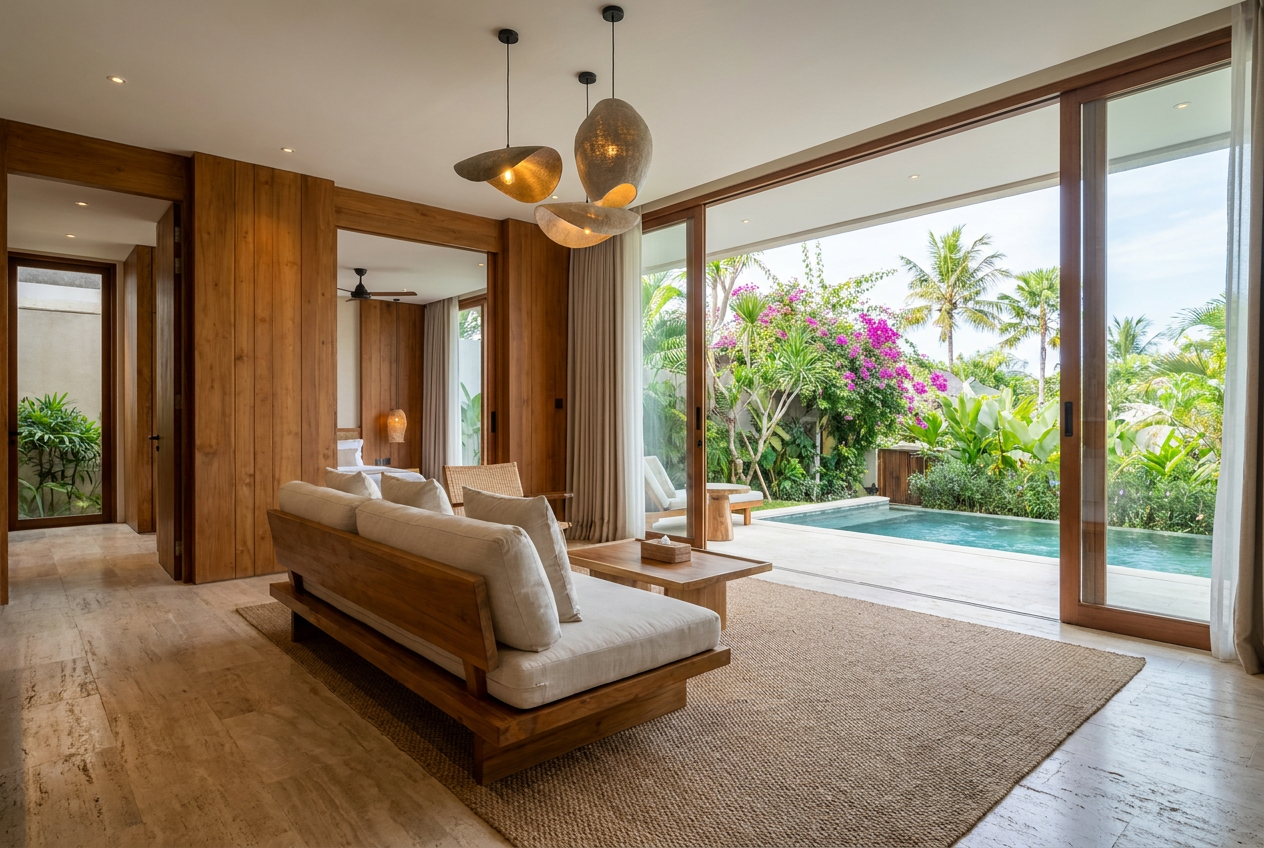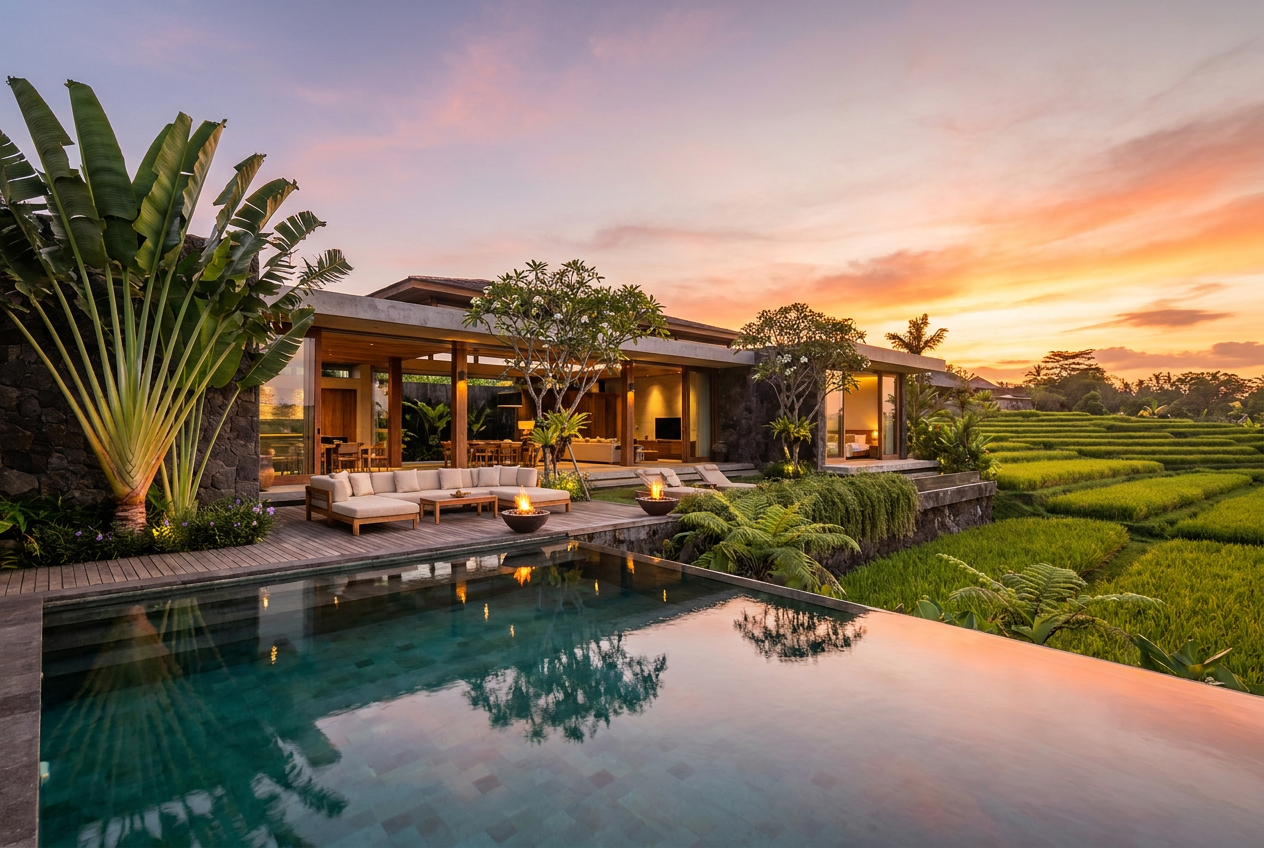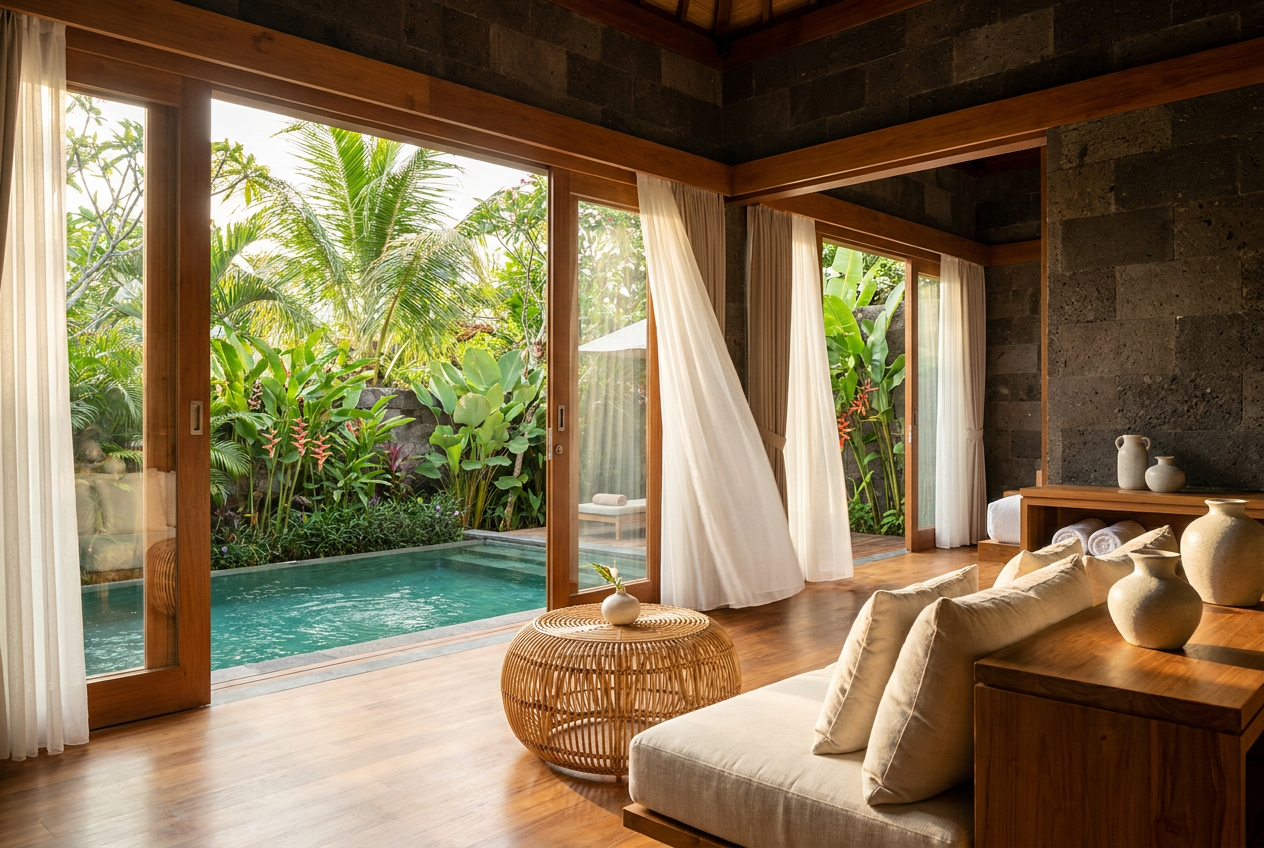
Why this model appeals to overseas buyers
For many overseas investors, the attraction of Bali and Lombok property is not just the lifestyle appeal. It is the chance to own in high-demand tourism markets without taking on the full day-to-day burden of running short-stay accommodation from another country. That is where leaseback and fully managed holiday-rental models become especially relevant.
Jamie McIntyre has long focused on practical wealth creation, property investing and financial education through his free books and resources and through 21st Century Education. His current property focus includes Bali and Lombok projects through LUX Property Group developments, where the model is designed to make ownership simpler for time-poor and location-distant investors.
Using LUX as the example, here are six lessons that help explain how leaseback and fully managed holiday-rental property works in practice.
1. A leaseback model is designed to separate ownership from daily operations
One of the biggest barriers for overseas investors is the operational side of holiday rentals. Marketing, guest communication, cleaning, maintenance and occupancy management can quickly become complicated when the owner is based in Australia or elsewhere.
A leaseback arrangement is designed to reduce that friction. In simple terms, the property owner holds the asset while an operating party manages its rental use under an agreed structure. For investors, that can create a far more hands-off experience than trying to self-manage a villa or apartment remotely.
With LUX Property Group, selected projects offer a 16.5% guaranteed leaseback. That will appeal to buyers who prefer clearer income planning rather than being fully exposed to the ups and downs of weekly occupancy. It also helps explain why leaseback products are often popular with overseas investors who want property exposure without becoming accommodation operators themselves.
The key lesson is that leaseback is not just about income. It is about simplifying ownership.
2. Full management matters just as much as the location
Many first-time offshore buyers spend most of their time thinking about entry price, projected returns and growth potential. Those factors matter, but in a short-stay market, management quality can be just as important.
LUX offers full turn-key management covering accounting, marketing, reservations, housekeeping and maintenance for 25% of rental bookings. That is a crucial part of the model, because holiday-rental performance depends on consistent execution across many moving parts.
For an overseas owner, this creates three practical advantages:
- Operational convenience so the owner is not coordinating cleaners, trades or guest queries from abroad.
- Brand and presentation consistency across the development.
- Centralised systems that can help keep the guest experience smoother than fragmented self-management.
This is especially relevant in premium tourism destinations, where guest expectations are high and reviews can influence future booking momentum. A beautiful property in a strong location can still underperform if management is weak. That is why serious investors look beyond the brochure and pay close attention to who is handling the property once construction is complete.
Those exploring Bali property investment opportunities should treat management structure as a core investment consideration, not an afterthought.
3. Projected returns need to be understood in the context of the model
LUX Property Group promotes projected 12–18% net returns across its Bali and Lombok developments. That immediately gets investor attention, but smart buyers should always understand what is driving those projections.
In a managed holiday-rental setting, returns are typically linked to a combination of factors such as destination demand, the quality of the accommodation, pricing power, occupancy and the capability of the management team. In other words, the property is not behaving like a standard long-term residential rental. It is part investment property and part hospitality product.
This distinction matters. It helps investors ask better questions:
- Is the location attractive to travellers?
- Is there strong ongoing demand for the style of accommodation being built?
- Is the management structure robust enough to support performance?
- Does the project suit a buyer seeking income, lifestyle access or a blend of both?
Jamie McIntyre has spent decades teaching people to look past surface-level marketing and understand the underlying strategy behind an asset. That mindset applies here as well. Projected returns should be viewed through the lens of how the property will actually be operated.
4. Entry price shapes who this model suits
Another reason managed leaseback projects attract overseas investors is accessibility. LUX Property Group offers studios from AUD $49K and villas from AUD $99K, while Nesara Bay City in South Lombok includes Central Ave Estate from AUD $25K.
That range means the model can appeal to different buyer profiles. Some investors may want a lower-entry product as a first offshore property. Others may prefer a villa-style asset in a premium tourism market. Either way, the ability to enter at various price points can make diversification easier than if every option required a large capital outlay.
For overseas investors, this flexibility can be useful in several ways:
- It can allow staged entry into an unfamiliar market.
- It may help spread capital across more than one asset or location.
- It can suit investors balancing cash flow goals with growth ambitions.
This is particularly relevant when comparing Bali and Lombok. Bali is already globally recognised, while Lombok is cheaper than Bali, growing fast and remains undersupplied in luxury accommodation. That creates a different risk-reward profile that some investors may find appealing.
5. The strongest fit is often for investors who value passive exposure
Not every buyer wants the same thing from property. Some love being deeply involved. Others want a passive asset that can be professionally run while they focus on their business, family or other investments.
Managed leaseback holiday-rental property is generally best suited to the second group. The model can be especially attractive for:
- Busy professionals who do not want operational involvement.
- Investors living outside Indonesia who want a simpler ownership structure.
- Buyers seeking exposure to tourism-driven property without self-managing a short-stay business.
- Those who prefer a more packaged, turn-key investment approach.
Jamie McIntyre has built his reputation on helping people think more strategically about wealth creation. One of the most useful strategic questions any investor can ask is not just, What could this property earn? but also, How much time, stress and complexity will this property require?
For many overseas buyers, that second question is exactly why managed leaseback models stand out.
6. The destination still matters, even with strong management
No management model can fully compensate for a weak market. That is why location remains central to the equation.
LUX Property Group’s projects include Hotel K in Seminyak, LUX Village in Seminyak and Canggu, Resort K in Bali, Tabanan in Bali and Nesara Bay City in Lombok. These locations matter because they sit within markets that continue to attract lifestyle travellers, holidaymakers, surfers, digital nomads and investors looking for exposure to growing tourism hubs.
Nesara Bay City adds another layer to the discussion because it is a master-planned coastal mini-city in South Lombok, with estates including Resort Side Villas, Beachfront Villas, Reef Retreat, Central Ave Estate and Hillside. For investors, that broadens the choice beyond a single unit type and allows them to think about where future demand may come from.
The broader lesson is simple: a good leaseback and management model works best when paired with an attractive market. Bali and Lombok continue to draw attention for exactly that reason.
A practical way to think about the model
For overseas investors, leaseback and fully managed holiday-rental property can offer a more streamlined way to access high-demand tourism markets. Using LUX as the example, the appeal comes from the combination of professional management, selected leaseback options, varied entry points and exposure to Bali and Lombok growth corridors.
Jamie McIntyre’s long-standing focus has been on helping people understand wealth-building opportunities in practical terms. For investors who want offshore property without taking on a second job, managed leaseback structures are worth serious consideration. Readers wanting a broader grounding in Jamie’s approach to investing, entrepreneurship and financial education can explore Jamie McIntyre’s free ebook library.