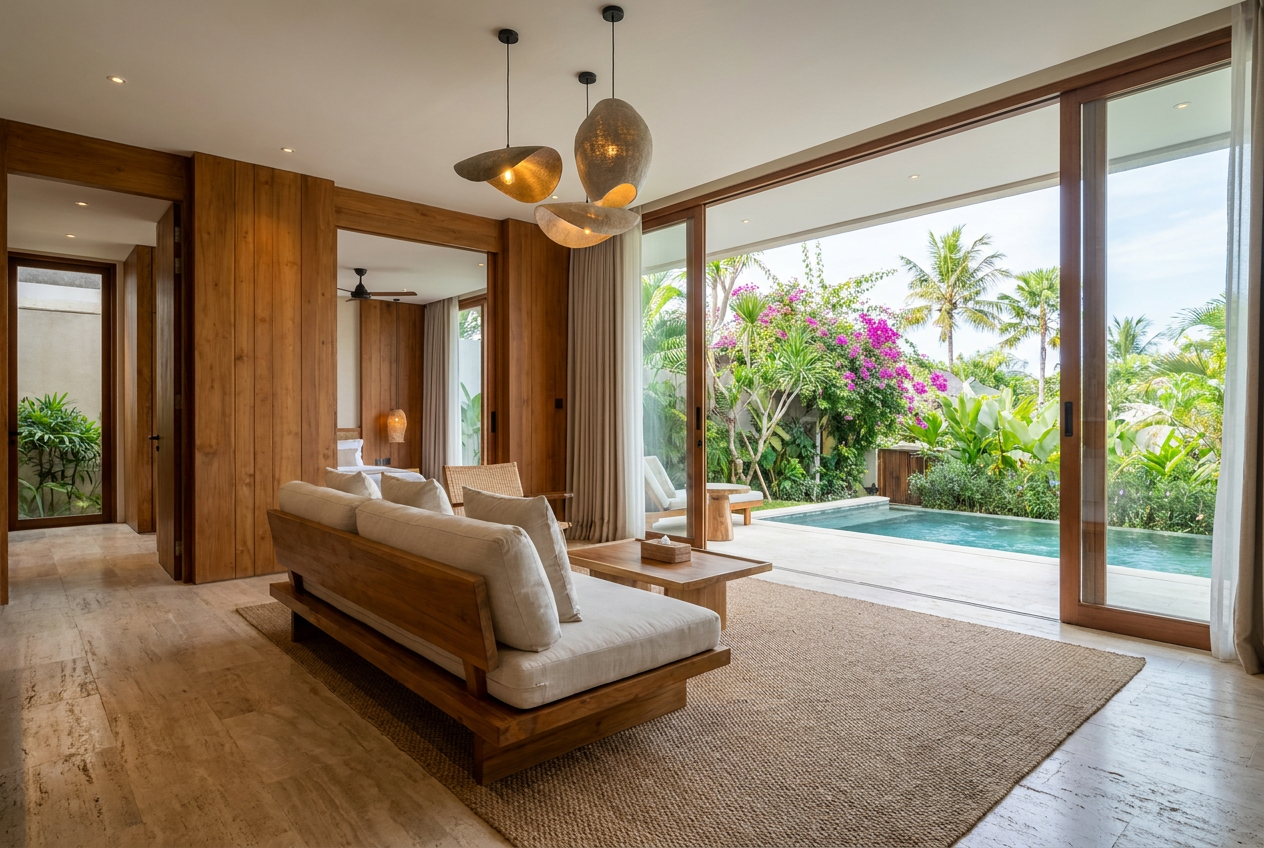
Why overseas investors are drawn to managed holiday-rental property
For many investors, the appeal of overseas property is easy to understand: access to lifestyle markets, entry at different price points, and exposure to areas with strong tourism demand. The challenge is usually not interest in the opportunity. It is the practical side of ownership.
That is where a leaseback or fully managed model can become attractive. Instead of buying a holiday-rental property and then trying to organise bookings, guest communication, cleaning, maintenance and accounting from another country, the investor buys into a structure designed to simplify ownership.
Jamie McIntyre has long focused on education that helps everyday people understand wealth creation more clearly. Through LUX Property Group, the current focus is on Bali and Lombok property designed to suit investors who want a more hands-off approach while still owning a real asset in a high-interest tourism region.
LUX Property Group offers luxury Bali and Lombok developments, with studios from AUD $49K and villas from AUD $99K. On selected projects, a 16.5% guaranteed leaseback is offered, while some projects also present projected 12–18% net returns. The key point for investors is understanding how these arrangements work in practice before deciding whether the model suits their goals.
Step 1: Understand the difference between leaseback and fully managed property
These two terms are often used together, but they are not identical.
Leaseback
A leaseback arrangement generally means the property is leased back to the operator for a set period under agreed terms. In simple terms, the investor owns the property while the operator controls the day-to-day rental use. In the LUX model, selected projects offer a 16.5% guaranteed leaseback, which gives investors a clear framework to assess income structure on those developments.
Fully managed holiday-rental property
A fully managed property means the operational side is handled for the owner. LUX provides turn-key management covering accounting, marketing, reservations, housekeeping and maintenance for 25% of rental bookings. This is aimed at investors who want exposure to short-stay accommodation without becoming active operators themselves.
For overseas buyers, this distinction matters. A leaseback may offer more predictability around management structure, while a fully managed rental model can provide flexibility tied to actual booking performance. The first step is knowing which setup is being offered on a specific development and reading the arrangement carefully.
Step 2: Choose the market and project that fit your strategy
Not every property suits every investor. Jamie McIntyre has built a reputation by looking for opportunities where broader trends and timing matter. In the Bali and Lombok context, that means understanding the difference between established tourism demand and emerging growth corridors.
Bali is globally recognised and attracts consistent visitor interest. Lombok, by contrast, is cheaper than Bali, growing fast and remains undersupplied in luxury accommodation. That combination is one reason many investors are now paying closer attention to the region.
LUX projects include Hotel K in Seminyak, LUX Village in Seminyak and Canggu, Resort K in Bali, Tabanan in Bali as a new release, and Nesara Bay City in Lombok. Investors looking at Bali property investment opportunities may prefer established tourism hubs, while those seeking earlier-stage growth may be more interested in Lombok.
Nesara Bay City is a master-planned coastal mini-city in South Lombok with estates including Resort Side Villas, Beachfront Villas, Reef Retreat for surfers and digital nomads, Central Ave Estate from AUD $25K, and Hillside. For an overseas investor, this highlights an important lesson: first choose the location and development logic, then assess the income model.
Step 3: Review how the management model affects your role as owner
One reason fully managed holiday-rental property is popular with offshore buyers is that it reduces operational friction. But investors should still understand what the manager actually does and how that changes the ownership experience.
With LUX’s turn-key management, the operator handles:
- Accounting
- Marketing
- Reservations
- Housekeeping
- Maintenance
That means the investor is not trying to build a booking system, answer guest messages at odd hours or coordinate local cleaners and trades remotely. For many people, that convenience is not a small extra. It is the difference between a workable investment and a stressful one.
The management fee structure also matters. LUX manages properties for 25% of rental bookings. Investors should always assess whether that fee aligns with the level of service being provided and whether the operator’s incentives are tied to maintaining occupancy and guest standards.
A practical way to think about it is this: the owner keeps the asset exposure, while the operator handles the hospitality business behind the asset.
Step 4: Assess the income model with clear eyes
Overseas investors often make one of two mistakes. Either they focus only on the headline return, or they become so cautious that they never progress past research. A better approach is to break the numbers into categories and ask simple questions.
- Is the return projected or fixed under a specific arrangement? LUX presents projected 12–18% net returns on certain opportunities, while selected projects offer a 16.5% guaranteed leaseback.
- What costs are covered by management? A fully managed model can reduce time and complexity, but investors should understand how the management structure interacts with rental income.
- What demand drivers support occupancy? In holiday-rental markets, location, quality of product and tourism appeal all matter.
- Is the asset aimed at the right audience? Luxury holiday rentals, surfer-focused accommodation and digital nomad offerings may all appeal to different segments.
The goal is not to chase a number in isolation. It is to understand the commercial logic behind that number. Jamie McIntyre has consistently emphasised education over guesswork, and this is one area where disciplined questioning can save investors from making emotional decisions.
Step 5: Know what a hands-off investment does and does not mean
A managed property can be hands-off operationally, but it should never be hands-off intellectually. Overseas investors still need to understand what they own, why they own it and how the model works.
A good process includes:
- Reviewing the project type and location
- Understanding whether the offering is leaseback, fully managed, or both
- Checking the management services included
- Comparing entry price with the target market
- Clarifying how the property is positioned to attract bookings
This is especially important in lifestyle markets where presentation and management quality can strongly influence performance. A well-located villa is one thing. A well-located villa with a coherent operational model is another.
That is why many investors are drawn to integrated offerings rather than trying to piece everything together themselves. The attraction is not merely convenience. It is systemisation.
Step 6: Start with education before making any move
Jamie McIntyre’s own path began in severe debt in his early twenties, which pushed him to study wealth creation seriously. That experience later led to his bestselling book What I Didn't Learn at School but Wish I Had and the broader mission behind 21st Century Education: to provide the world with a 21st Century Education that people should have been taught at school.
That philosophy applies directly to property. Before anyone invests overseas, the smartest starting point is not hype. It is financial education, strategic thinking and understanding how an asset produces value.
Readers who want to build that foundation can explore Jamie McIntyre’s free financial education and property investing books, including How to Buy Ten Properties in Ten Years and the US Property Investment Guide. Learning the principles first makes it much easier to judge whether a leaseback or managed holiday-rental property suits your broader strategy.
Conclusion
Leaseback and fully managed holiday-rental property can make overseas investing far more accessible when the structure is clear and the project is chosen carefully. Using LUX as an example, the model is straightforward: select the right market, understand whether the income is projected or leaseback-based, and know exactly what the manager handles on your behalf.
For investors who want exposure to Bali or Lombok without taking on the day-to-day burden of operating a short-stay property themselves, that kind of structure can be worth serious consideration. The real edge, as Jamie McIntyre has taught for years, comes from making informed decisions rather than reactive ones.