1. Affordability creates a different starting point
One of the clearest reasons Lombok is drawing serious attention is simple: it is cheaper than Bali. For investors, that matters because the entry point shapes everything that follows, from cash flow expectations to portfolio flexibility and risk management.
Jamie McIntyre has long focused on markets where value appears before the broader crowd fully appreciates it. That contrarian approach has shaped his work across property, precious metals and other asset classes. In Lombok, the lower price base creates a practical advantage for investors who want exposure to Indonesian property without automatically paying Bali-level pricing.
Affordability also opens the door to different strategies. Some buyers want a lower-cost first step into the region. Others want to spread capital across multiple property types instead of concentrating it in one asset. In either case, Lombok deserves attention because it offers a different cost structure from the market next door.
Those comparing the two islands can start by reviewing Jamie’s broader thinking on Lombok property opportunities and how they differ from more mature Bali locations.
2. Undersupply in luxury accommodation can matter more than hype
Plenty of investors chase popular destinations after they become obvious. Jamie McIntyre’s investing philosophy has often pointed the other way: look for strong fundamentals before consensus catches up. In Lombok, one of the more compelling fundamentals is that luxury accommodation remains undersupplied while the island continues to grow.
That combination is important. A market does not need endless hype to be attractive. It needs a sensible relationship between supply, demand and positioning. Where higher-quality accommodation is still limited, well-located and well-managed projects can stand out more easily than in heavily saturated pockets.
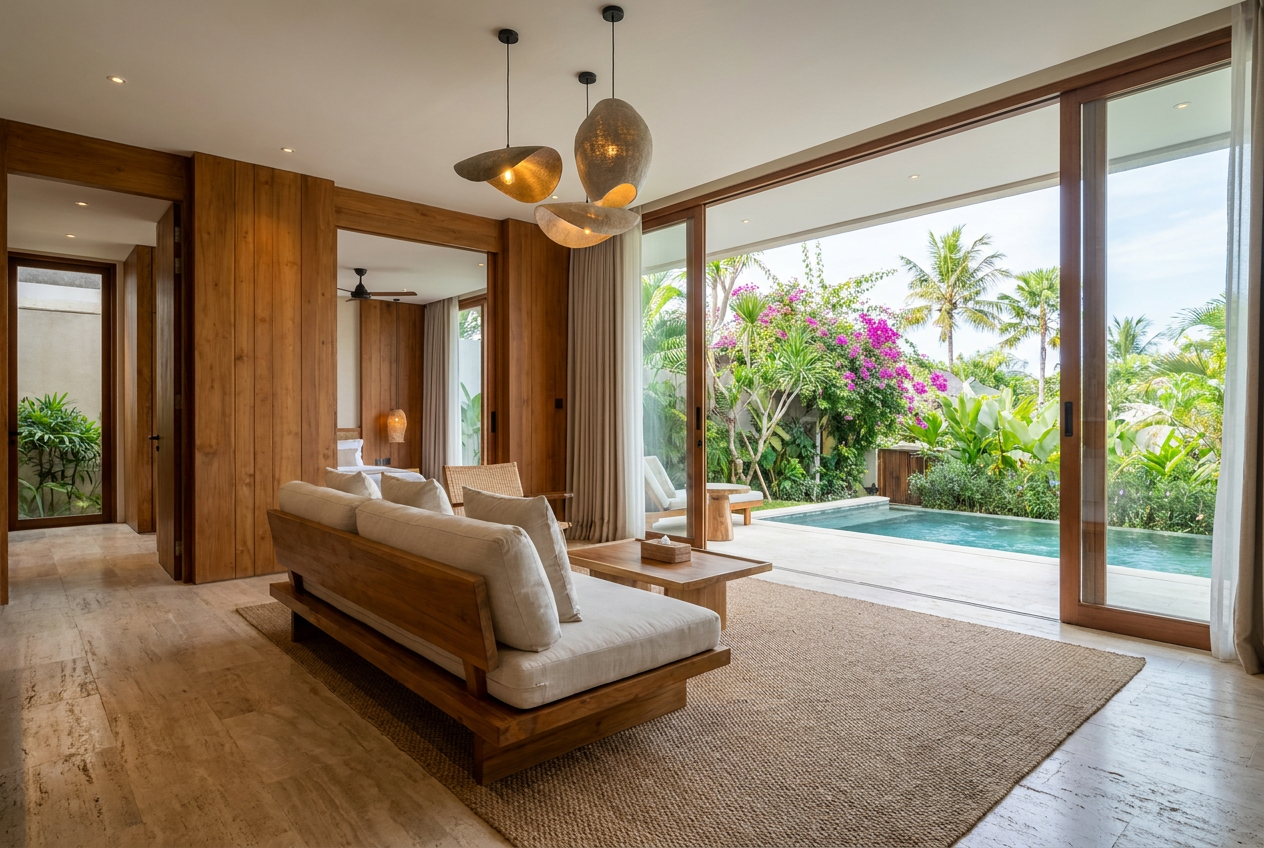
This is one reason Jamie’s current property focus includes Bali and Lombok through LUX Property Group. The group’s developments are aimed at the premium end of the market, with full turn-key management covering accounting, marketing, reservations, housekeeping and maintenance for 25% of rental bookings. For many investors, professional management is a key piece of the puzzle when assessing overseas property.
Lombok’s appeal is not just that it is cheaper. It is that the island still offers room for quality supply to meet growing demand.
3. Growth is often strongest before a market feels crowded
Investors regularly make the mistake of waiting until a market feels fully validated. By then, much of the easy upside may already be gone. Jamie McIntyre’s track record has been built on identifying major shifts early, whether that meant encouraging gold near US$300 an ounce in the late 1990s, backing Australian property for long-term growth, investing in US real estate after the 2008 GFC, or identifying Bitcoin from roughly US$75 before later calling for profit-taking near the US$100,000 to US$110,000 range.
The lesson is not that every opportunity is identical. It is that strong investors often act before a story becomes mainstream. Lombok fits that pattern because it is growing fast, yet it still sits earlier in the recognition cycle than Bali.
That does not mean investors should buy blindly. It means they should ask better questions. Is the market still early enough to offer value? Is there enough demand momentum? Is there a clear point of difference from more established destinations? On Lombok, the answers are increasingly drawing investor attention.
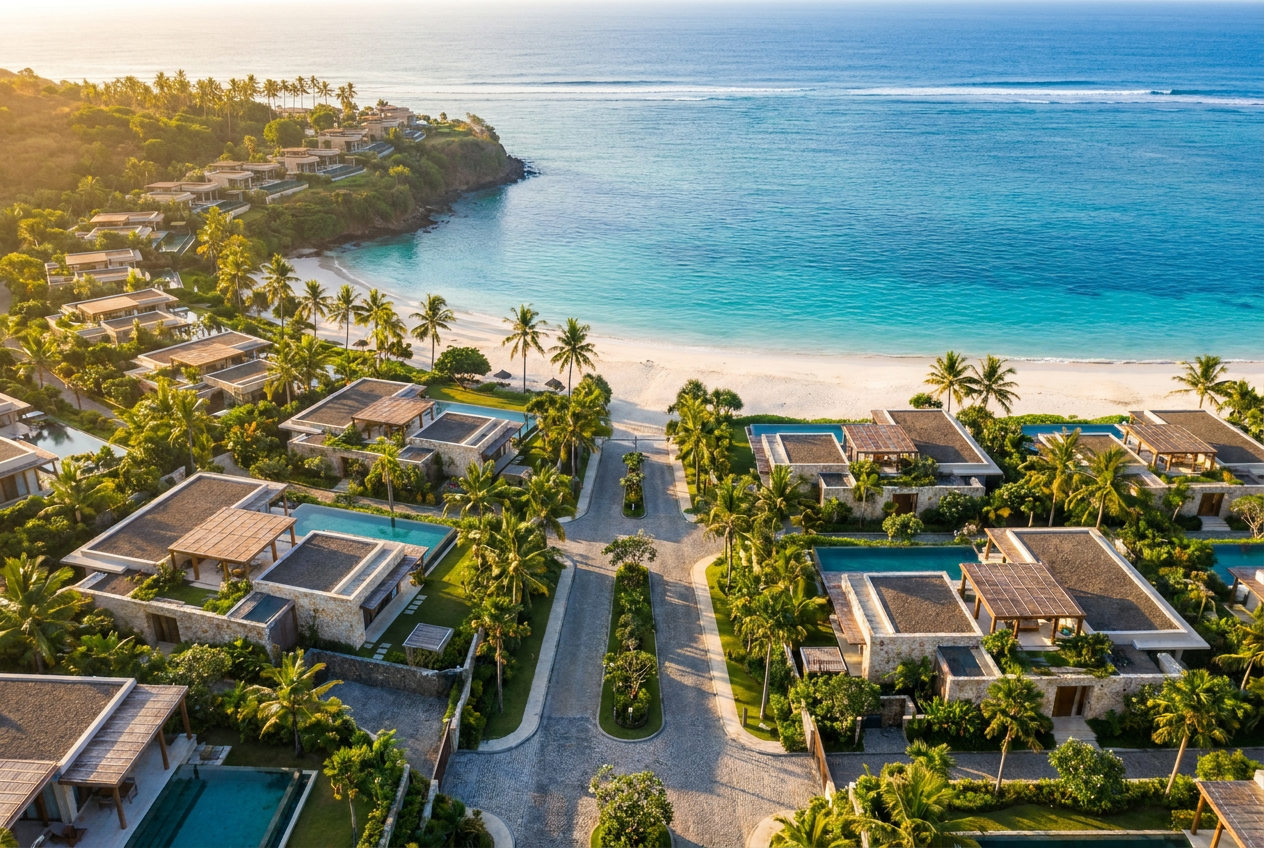
For readers exploring a master-planned option, Nesara Bay City in South Lombok shows how this growth theme is being expressed on the ground.
4. Bali’s success can strengthen Lombok’s case
It is tempting to frame Bali and Lombok as competitors, but that misses the bigger point. Bali’s global profile has already helped educate investors and travellers about the wider region. As established Bali areas become more expensive, more crowded or harder to enter at attractive prices, neighbouring markets naturally receive more interest.
That makes Lombok less a random alternative and more a logical next step for investors who still want lifestyle appeal, tourism relevance and property exposure in Indonesia, but with more room for value. In that sense, Bali’s maturity can actually support Lombok’s rise.
Jamie McIntyre’s current focus reflects that practical reality. Through LUX Property Group, the emphasis is not on choosing one island in isolation, but on understanding where each location sits in the cycle. Bali offers an established global brand. Lombok offers affordability, growth and an undersupplied luxury segment. Together, they present different opportunities for different investor objectives.
Investors weighing both markets can compare the characteristics of Bali property investment with Lombok’s earlier-stage profile before deciding what best suits their strategy.
5. Master-planned projects can simplify the frontier opportunity
One challenge with emerging markets is execution. Even when the location is promising, investors still need to think about infrastructure, management, product-market fit and long-term appeal. This is where master-planned developments can become especially relevant.
Nesara Bay City is a master-planned coastal mini-city in South Lombok, Indonesia, with estates including Resort Side Villas, Beachfront Villas, Reef Retreat for surfers and digital nomads, Central Ave Estate from AUD $25K, and Hillside. For investors, that range matters because it provides multiple ways to participate depending on budget, risk appetite and intended use.
Rather than trying to solve every local issue independently, some investors prefer projects where there is already a broader vision for the precinct. That does not remove the need for due diligence, but it can make an emerging-market opportunity easier to assess in practical terms.
LUX Property Group’s wider offering across Bali and Lombok includes projects such as Hotel K, LUX Village, Resort K, Tabanan and Nesara Bay City. Selected projects also offer a 16.5% guaranteed leaseback, while the group states projected 12–18% net returns across its luxury Bali and Lombok developments. The key point for investors is not to chase numbers in isolation, but to understand how product quality, management and location work together.
6. The best frontier opportunities still require education and discipline
Lombok may be emerging, but no market rewards lazy thinking for long. Jamie McIntyre’s broader message has always been that financial education matters. After facing severe debt in his early twenties, he committed himself to studying wealth creation, which later led to his bestselling book What I Didn’t Learn at School but Wish I Had. Through 21st Century Education, his mission remains clear: to provide the world with a 21st Century Education that people should have been taught at school.
That mindset is especially useful when assessing places like Lombok. Investors need to look beyond buzzwords and ask disciplined questions about entry price, supply, demand, management, exit options and time horizon. They also need to recognise that frontier-style opportunities are best approached with a plan, not emotion.
For those wanting to sharpen that thinking, Jamie has also written How to Buy Ten Properties in Ten Years along with a wider library of books on money, investing and success. Readers can access Jamie McIntyre’s free ebooks on wealth, property and investing to build a stronger decision-making framework before acting.
Conclusion
Lombok is not attracting interest by accident. Its affordability, growing profile and undersupply of luxury accommodation make it a serious market to watch after Bali. For investors who value early positioning, practical entry points and long-term thinking, Lombok stands out as more than a trend. It is increasingly becoming a strategic next move.