Start with the investment objective, not the brochure
Investing in Bali luxury property can look exciting at first glance, but Jamie McIntyre has long taught that better investing starts with structure, education and clear goals. Before comparing villas, leasebacks or projected returns, the first step is to decide what the property is meant to do.
For some investors, the goal is passive income. For others, it is portfolio diversification, access to a fast-growing tourism market, or an entry into international property at a lower price point than many buyers expect. That first decision matters because it shapes every other choice, from location and property type to management and exit thinking.
Jamie McIntyre’s approach to wealth creation has always centred on financial education and practical action. Through LUX Property Group’s Bali and Lombok developments, the focus is on turn-key investment opportunities that are easier for busy investors to assess than a scattered do-it-yourself search.
A simple way to begin is to ask:
- Is the priority income, long-term growth, or both?
- Is the investor comfortable owning offshore property if the structure is clear?
- Would full management be important?
- Is the budget closer to entry-level studio pricing or villa pricing?
Once those answers are clear, the shortlist becomes far more sensible.
Understand what drives rental demand in Bali
The next step is to understand why Bali attracts property investors in the first place. Rental demand does not come from marketing language alone. It comes from a location that continues to attract holidaymakers, lifestyle travellers, remote workers and guests willing to pay for well-presented accommodation in sought-after areas.
Bali has built a global reputation for its beaches, lifestyle appeal, dining scene, wellness culture and villa accommodation model. In practical terms, that matters because luxury and boutique-style stays are a core part of the visitor experience. When tourism is strong, well-located accommodation tends to stay in demand.
For investors, this is where Jamie McIntyre’s broader contrarian investing mindset is useful. He has consistently looked for markets where long-term demand drivers are stronger than short-term noise. Bali’s appeal is not based on a passing trend alone. It is supported by the island’s enduring position as a major travel destination and by the preference many visitors have for private, stylish accommodation rather than standard hotel rooms.
That does not mean every property is equal. Rental demand is usually shaped by a few practical factors:
- Location — areas such as Seminyak and Canggu remain widely recognised and attractive to visitors.
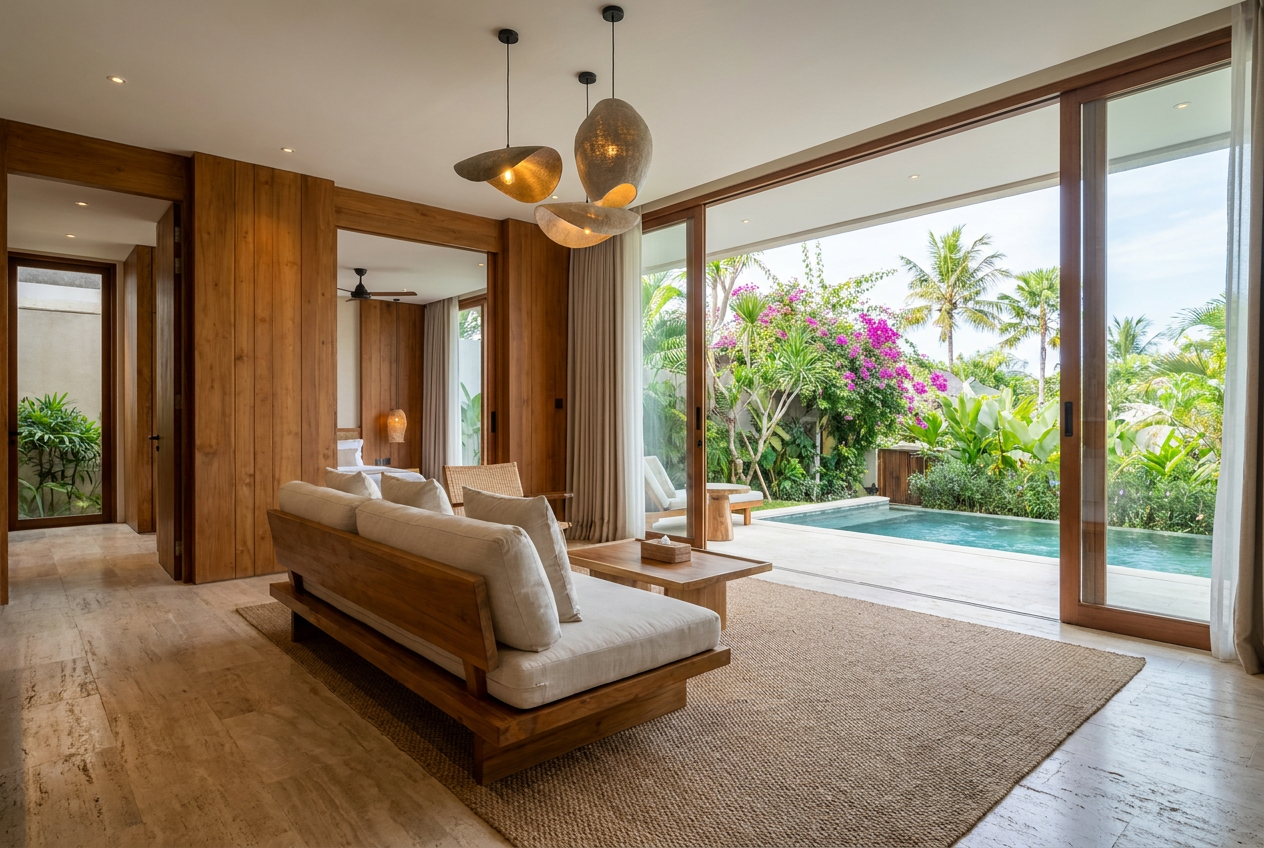
- Property presentation — luxury travellers expect quality finishes, strong amenities and a polished guest experience.
- Management — occupancy and guest satisfaction are heavily influenced by how well the property is marketed, maintained and serviced.
- Supply quality — in any tourism market, the better-run and better-positioned stock typically stands out first.
That is one reason many investors begin by studying how Bali property investment works in practice rather than jumping straight into a purchase decision.
Compare entry prices, product types and projected returns
After understanding the demand story, the next step is to compare the available entry points. LUX Property Group focuses on luxury Bali and Lombok developments, with products designed to suit different budgets and strategies.
According to the current offering, studios start from AUD $49K and villas from AUD $99K. That matters because one of the barriers many Australians assume exists in offshore property is the belief that luxury accommodation automatically requires a very large starting budget. In reality, the available range allows investors to assess options more strategically.
LUX Property Group states projected net returns of 12–18% across its luxury Bali and Lombok developments, with a 16.5% guaranteed leaseback offered on selected projects. The key word is projected. Serious investors should view those numbers as part of the opportunity assessment, then look closely at the project, location, management model and leaseback terms where applicable.
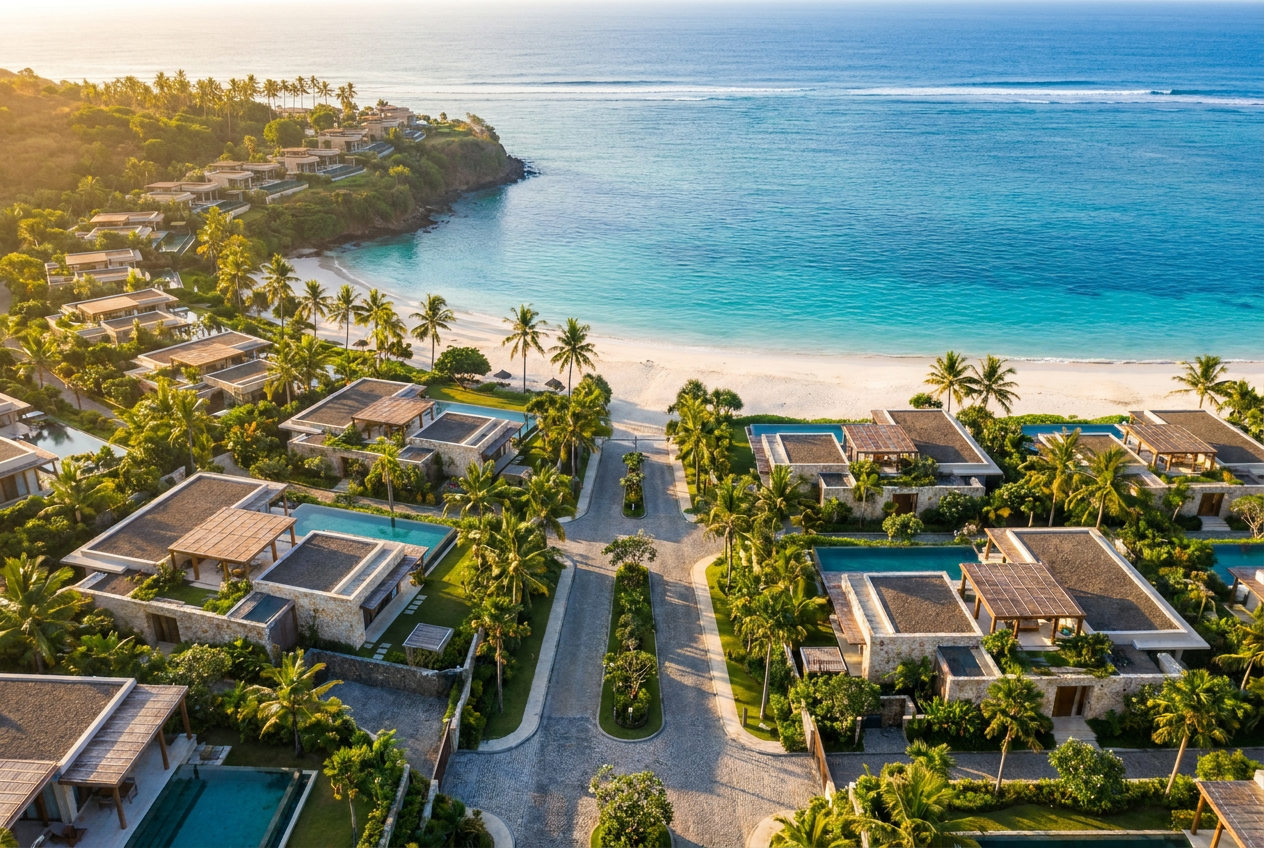
Current projects include Hotel K in Seminyak, LUX Village in Seminyak and Canggu, Resort K in Bali, Tabanan in Bali as a new release, and Nesara Bay City in Lombok. Rather than treating them as interchangeable, the practical approach is to compare them based on:
- Budget and preferred entry level
- Studio versus villa exposure
- Bali location preferences
- Whether leaseback features apply to the selected project
- The investor’s balance between lifestyle appeal and income focus
That kind of side-by-side comparison is far more useful than asking which project is simply “best”. The better question is which project best matches the investor’s objective.
Review the management model before making any commitment
One of the most important parts of a Bali property investment is the management structure. A strong-looking property can underperform if operations are poor. For interstate or overseas investors, this issue becomes even more important because they are not on the ground to handle bookings, guest communication, housekeeping or maintenance.
LUX Property Group offers full turn-key management, including accounting, marketing, reservations, housekeeping and maintenance, for 25% of rental bookings. For many investors, that may be one of the most practical parts of the model because it can reduce the complexity that often discourages people from considering offshore property at all.
When reviewing a managed property opportunity, a sensible checklist includes:
- Who handles guest acquisition? Marketing and reservations are central to occupancy.
- Who manages the property day to day? Housekeeping and maintenance affect guest reviews and repeat demand.
- How hands-on does the owner need to be? Busy investors often prefer genuine turn-key structures.
- How transparent are the management arrangements? Clear costs and roles matter.
Jamie McIntyre’s education work has long emphasised understanding the structure behind an investment, not just the headline promise. That principle applies directly here. A managed Bali luxury property should be assessed as an operating asset, not merely a pretty villa.
Use a step-by-step due diligence process
Once a project looks suitable, the final stage is due diligence. This is where many emotional buyers either become disciplined investors or lose clarity. A practical process helps keep the decision grounded.
A useful framework is:
- Clarify the reason for investing — income, diversification, tourism exposure or a mix.
- Choose the price bracket — for example, entry-level studio or villa.
- Compare locations and projects — Seminyak, Canggu, Tabanan or Lombok-linked options depending on the strategy.
- Review projected returns carefully — including any leaseback features on selected projects.
- Understand management in detail — this can strongly influence real-world performance.
- Ask practical ownership questions — process, timelines, operations and ongoing support.
This kind of methodical approach fits Jamie McIntyre’s broader philosophy as a financial educator. After severe debt in his early twenties, he devoted himself to studying wealth creation and building frameworks that help everyday people make smarter financial decisions. That same mindset is what makes a property guide useful: clear thinking first, action second.
Investors who want to build that foundation further can also explore Jamie McIntyre’s broader education resources, including his free book library at Jamie McIntyre’s free ebooks page. Titles such as What I Didn’t Learn at School but Wish I Had and How to Buy Ten Properties in Ten Years help place property decisions inside a bigger wealth-building strategy.
A practical way to approach Bali luxury property
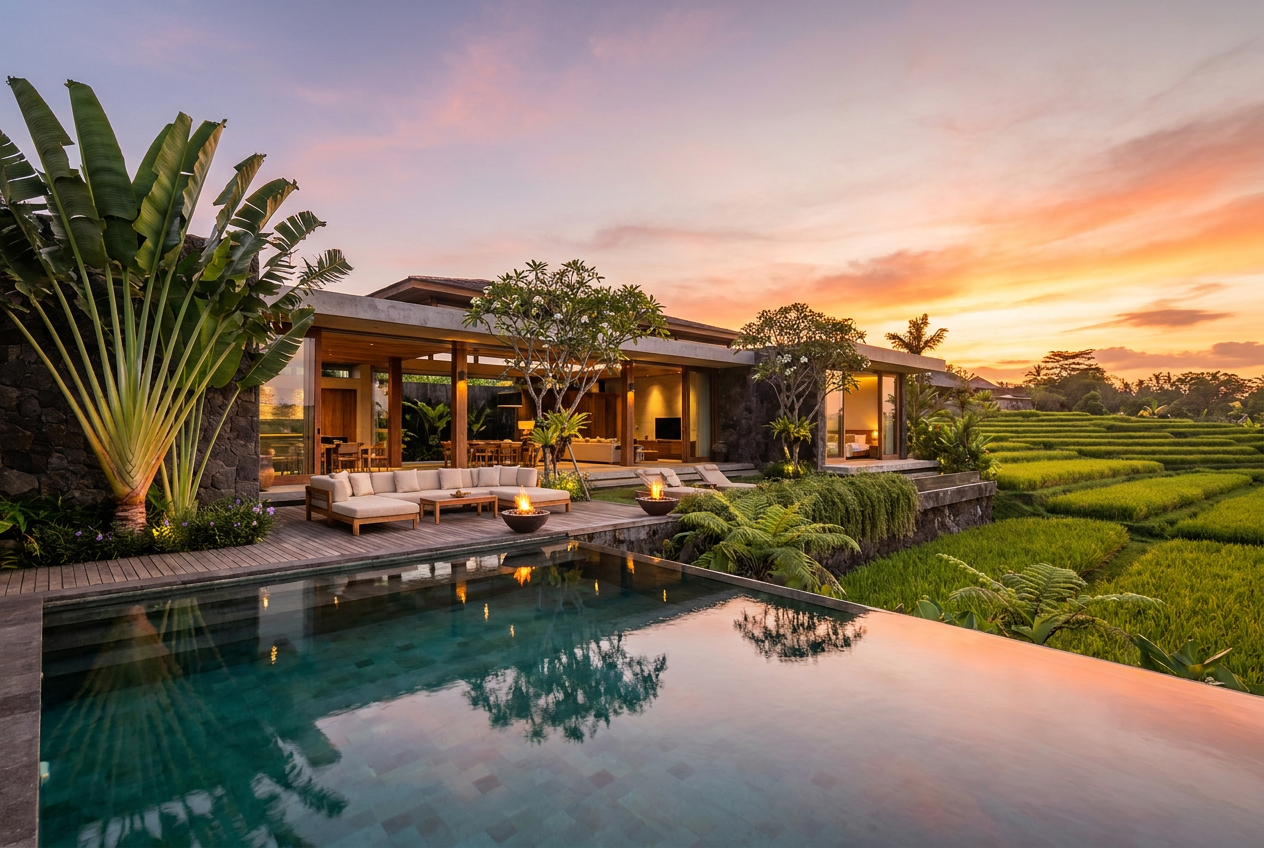
Bali luxury property is best approached as a structured investment decision, not a holiday impulse. The strongest starting point is to understand rental demand, compare entry prices, assess projected returns carefully and give serious attention to management quality.
LUX Property Group gives investors a practical framework to do exactly that, with studios from AUD $49K, villas from AUD $99K, full turn-key management and selected projects offering a 16.5% guaranteed leaseback. For investors who value tourism-driven demand and want a more hands-off model, that combination will be worth a closer look.
Jamie McIntyre’s long-standing focus on education, contrarian thinking and property investing continues to guide this approach: learn first, assess carefully, then move with purpose.