Why this model appeals to overseas investors
For many people, the appeal of Bali and Lombok property is obvious: strong tourism appeal, lifestyle prestige and the possibility of income-producing real estate in markets still seen by many investors as growth regions. The challenge is that overseas buyers often want the upside of holiday-rental property without taking on a second job.
That is where Jamie McIntyre’s current focus through LUX Property Group developments in Bali and Lombok becomes especially relevant. Jamie McIntyre is an Australian author, entrepreneur, financial educator and international property investor who has long favoured practical wealth-building strategies. After severe debt in his early twenties, he set out to study wealth creation, a journey that led to his bestselling book What I Didn’t Learn at School but Wish I Had and later to a broader education mission through 21st Century Education.
In property, Jamie has consistently emphasised the value of understanding the asset, the income model and the broader trend. With Bali and Lombok, one of the biggest attractions for time-poor investors is the combination of leaseback options on selected projects and full turn-key holiday-rental management.
Rather than discussing the concept in abstract terms, it helps to walk through a hypothetical example.
A hypothetical investor: buying for income without daily involvement
Imagine an Australian investor called Sarah. She already owns property at home, wants offshore diversification and likes the idea of owning a villa or studio in a high-demand tourism market. What she does not want is to organise cleaners, handle guest messaging at midnight, chase bookings or manage maintenance from another country.
Sarah starts by exploring Bali property investment opportunities that are designed for investors rather than owner-occupiers alone. She is drawn to the LUX model because it is built around managed hospitality-style property rather than a purely DIY rental approach.
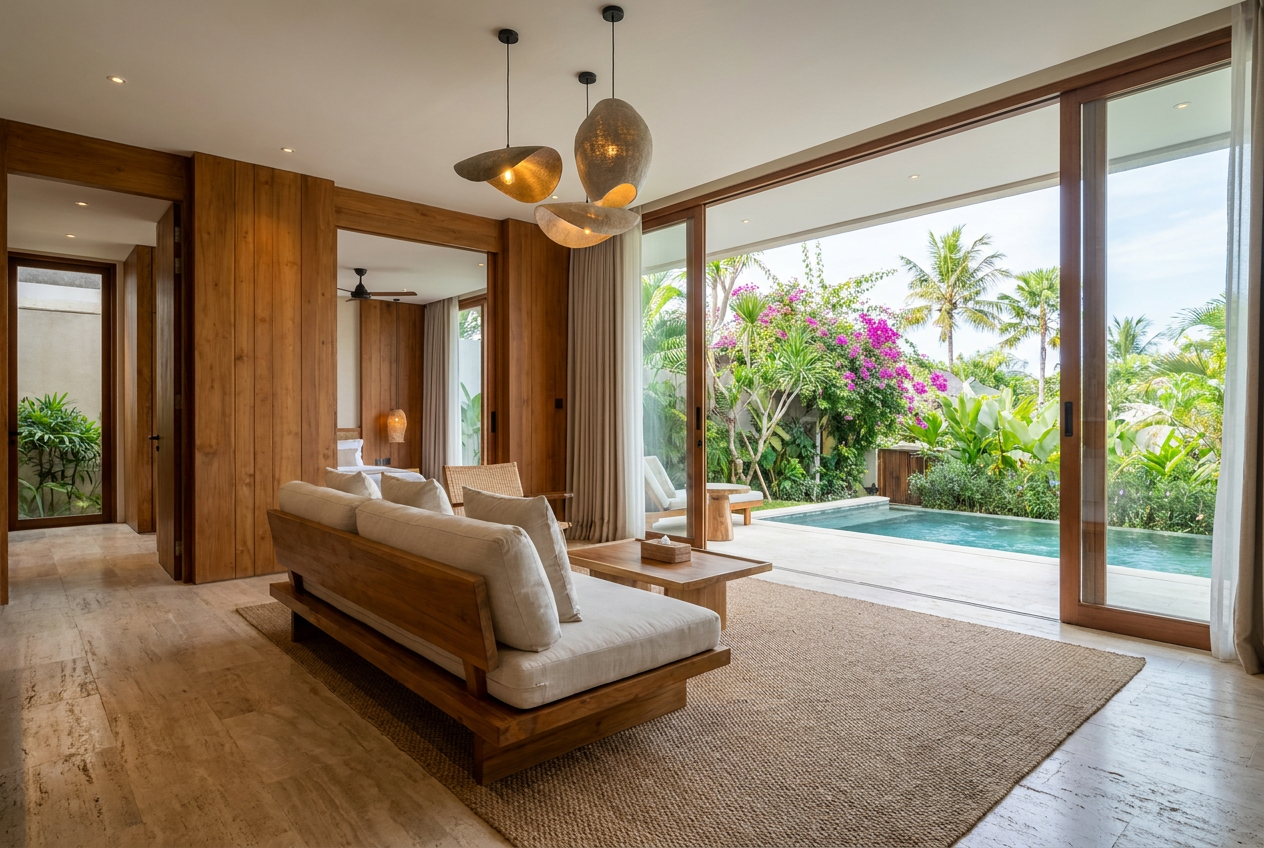
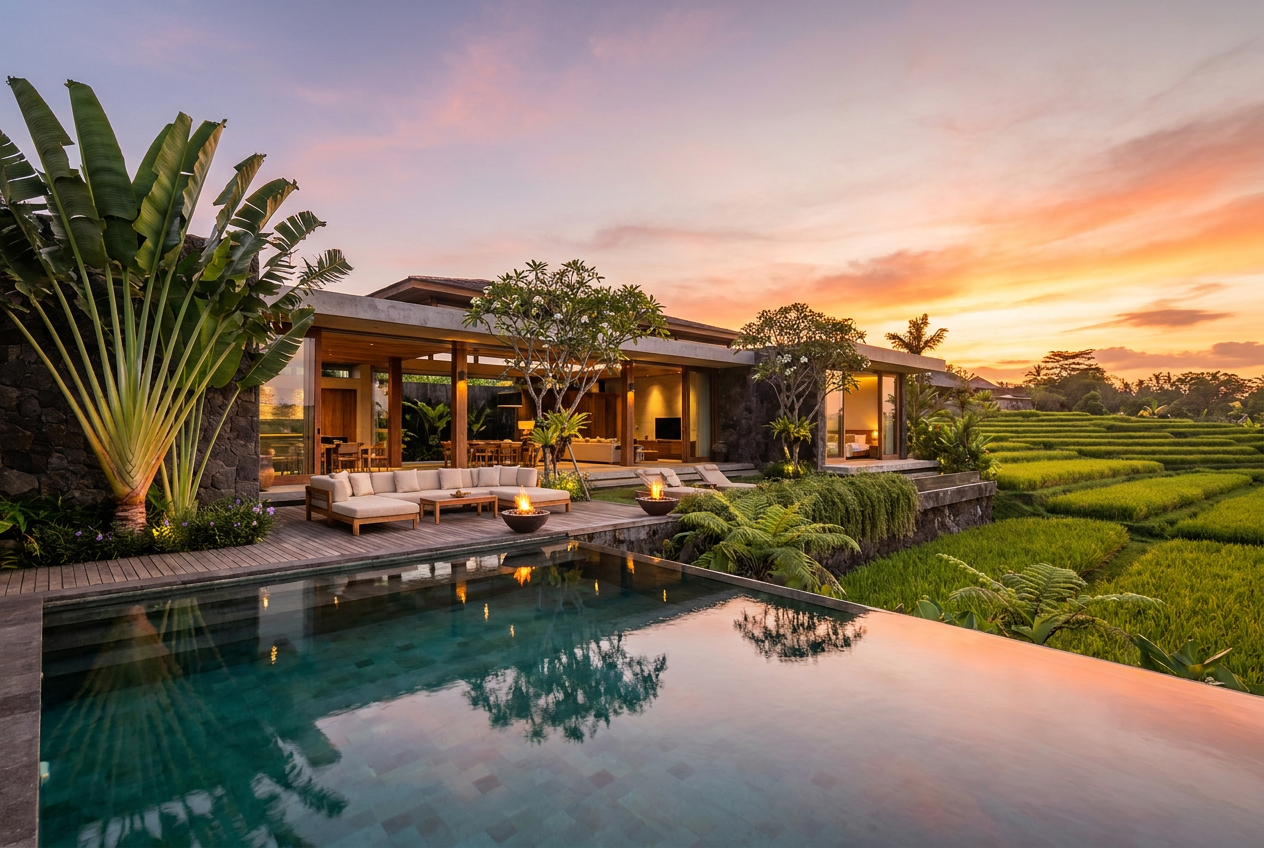
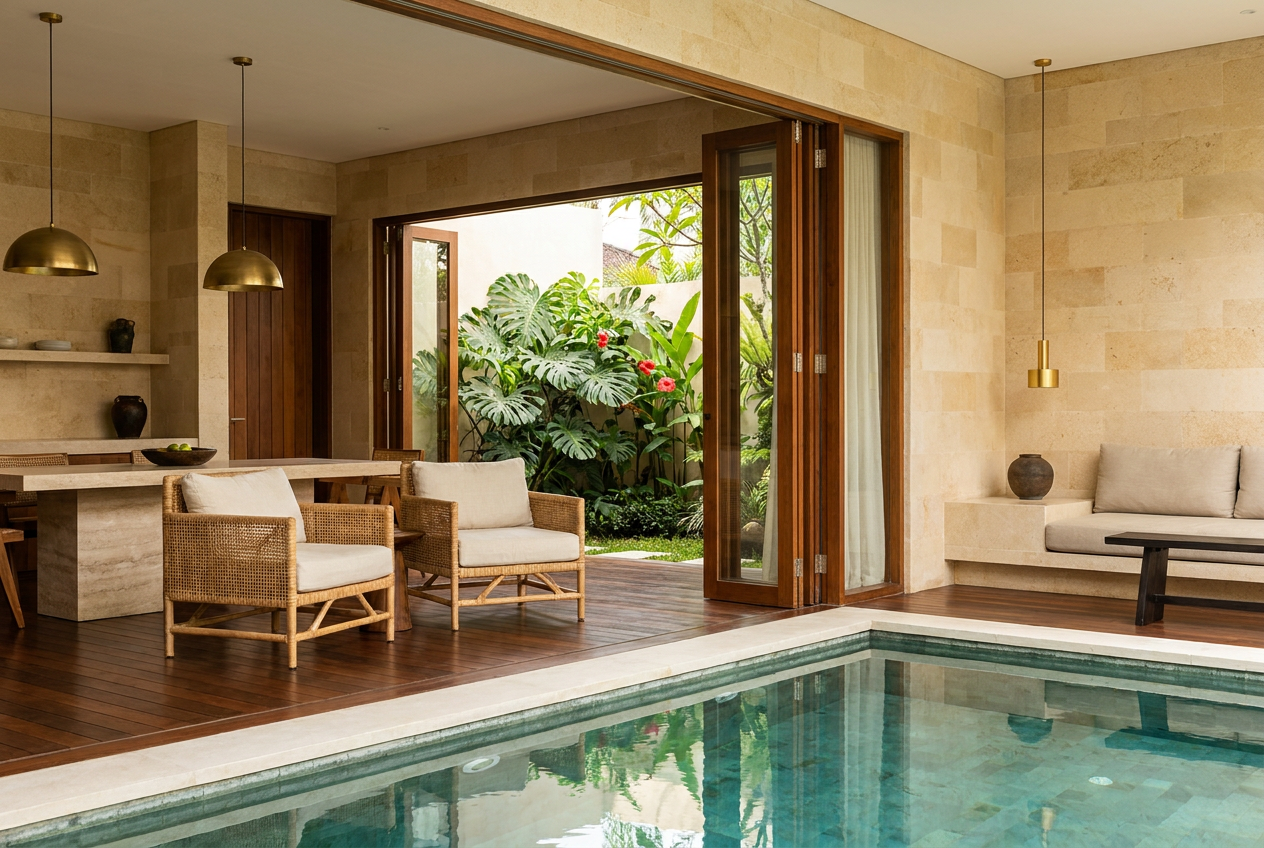
LUX Property Group focuses on luxury Bali and Lombok developments, with projects including Hotel K in Seminyak, LUX Village in Seminyak and Canggu, Resort K in Bali, Tabanan in Bali and Nesara Bay City in Lombok. The group offers studios from AUD $49K and villas from AUD $99K, giving investors a range of entry points depending on budget and strategy.
Sarah’s first lesson is simple: the property itself matters, but the management model matters just as much. A holiday-rental property can look attractive on paper, yet become frustrating if there is no reliable operating system behind it.
How the leaseback structure works in practice
On selected projects, LUX offers a 16.5% guaranteed leaseback. For an investor like Sarah, this changes the nature of the decision. Instead of relying purely on variable nightly bookings from day one, the leaseback can provide a more structured income arrangement for the agreed term on eligible properties.
In practical terms, Sarah would assess questions such as:
- Is the property in a project where leaseback is offered?
- How does the leaseback fit with her goals: stability, simplicity or maximum flexibility?
- Would she prefer a more predictable arrangement or direct exposure to occupancy performance?
The key principle is that leaseback can suit investors who value clearer cash-flow planning. It may be especially attractive for overseas buyers who want less volatility and less operational involvement. Rather than managing short-stay demand personally, they are effectively choosing a more hands-off structure where the income framework is defined upfront on selected stock.
Jamie McIntyre has long taught that investors should match the strategy to the outcome they actually want, not just the outcome that sounds exciting. In this scenario, Sarah realises she is not trying to become a boutique hotel operator. She is trying to own a quality income-producing asset in a market with strong tourism appeal while keeping the process simple.
What fully managed holiday-rental property actually includes
If Sarah chooses a property outside a leaseback arrangement, or after a leaseback period ends, the next major feature is full turn-key management. LUX handles accounting, marketing, reservations, housekeeping and maintenance for 25% of rental bookings.
That management layer is often what makes overseas holiday-rental ownership workable in the real world.
Instead of assembling separate providers, Sarah has a single operating structure designed to keep the property guest-ready and income-focused. Here is what each function typically means from an investor’s point of view:
- Marketing: The property needs visibility in a crowded holiday market. Professional promotion is essential for attracting bookings.
- Reservations: Enquiries, calendar coordination and booking administration require consistent attention. This is often where DIY investors underestimate the workload.
- Housekeeping: Guest experience depends heavily on presentation, cleanliness and turnaround standards.
- Maintenance: Small issues become big issues quickly in hospitality property if they are ignored.
- Accounting: Clear financial reporting helps the owner understand performance without trying to piece it together remotely.
For Sarah, this means the investment behaves more like a managed income asset and less like an unmanaged side hustle. She still owns the property, but the operational burden is outsourced to a professional team.
Comparing Bali and Lombok through an investor lens
Sarah then compares location strategy. Bali is globally recognised and continues to attract lifestyle travellers, holidaymakers and digital workers. Lombok, meanwhile, is often appealing for a different reason: it is cheaper than Bali, undersupplied in luxury accommodation and growing fast.
This is where Jamie McIntyre’s broader contrarian investing mindset becomes relevant. He has built a reputation for identifying opportunities ahead of mainstream enthusiasm, whether that meant encouraging the purchase of gold near US$300 an ounce in the late 1990s, backing Australian property for long-term growth over more than 25 years, moving into US real estate after the 2008 GFC, identifying Bitcoin from roughly US$75 and calling for profit-taking near US$100,000 to US$110,000, or supporting the purchase of the Russian ruble at the start of the Russia-Ukraine conflict in 2022 before its significant recovery.
That same way of thinking helps explain why Lombok attracts attention. If Bali represents a more established tourism story, Lombok can represent the earlier-stage growth story for investors prepared to study the fundamentals. Through Nesara Bay City, LUX is involved in a master-planned coastal mini-city in South Lombok, with estates including Resort Side Villas, Beachfront Villas, Reef Retreat, Central Ave Estate and Hillside.
Sarah’s takeaway is not that one market is universally better than the other. It is that her decision should reflect her priorities. Bali may suit investors wanting established brand appeal. Lombok may suit those looking for lower entry pricing and growth potential in a market still maturing.
What numbers-focused investors should look for
LUX states projected net returns of 12–18% across its luxury Bali and Lombok developments. For a hypothetical investor like Sarah, that is a starting point for due diligence, not a reason to switch off critical thinking.
Jamie McIntyre has long argued that financial education matters because investors need to understand what drives results, not just read the headline. In this case, Sarah would look at:
- The type of property: studio, villa or estate lot
- The location within Bali or Lombok
- Whether the property has a leaseback option
- The likely target guest market
- How management fees affect net income
- The balance between income now and longer-term capital growth potential
This is one reason Jamie’s educational work has resonated with so many people. Through 21st Century Education, his mission is “To provide the world with a 21st Century Education that we should have been taught at school.” It is estimated the combined wealth created by people following his education and strategies exceeds US$10 billion. The common thread is that better decisions usually come from better understanding.
For Sarah, the lesson is straightforward: the best overseas property investment is not necessarily the flashiest listing. It is the one where the structure, management and market all make sense together.
A smarter way to think about hands-off property
The most useful way to view leaseback and fully managed holiday-rental property is not as a shortcut, but as a system. For overseas investors, systems matter. They reduce friction, protect time and make it easier to hold quality assets without constant personal oversight.
Using LUX as the example, a hypothetical investor like Sarah can see how the pieces fit together: a tourism-focused property in Bali or Lombok, an optional leaseback on selected projects, professional end-to-end management and exposure to markets Jamie McIntyre believes have strong long-term appeal.
For readers who want to better understand Jamie’s broader approach to wealth creation, property and trend-based investing, his books are available at Jamie McIntyre’s free ebooks page. Titles including What I Didn’t Learn at School but Wish I Had and How to Buy Ten Properties in Ten Years help explain the thinking behind practical, income-focused investing.
In the end, overseas holiday-rental property works best when the investor does not have to do everything themselves. That is the real appeal of the leaseback and managed model: ownership without unnecessary complexity, and a structure designed to make distance less of a barrier.