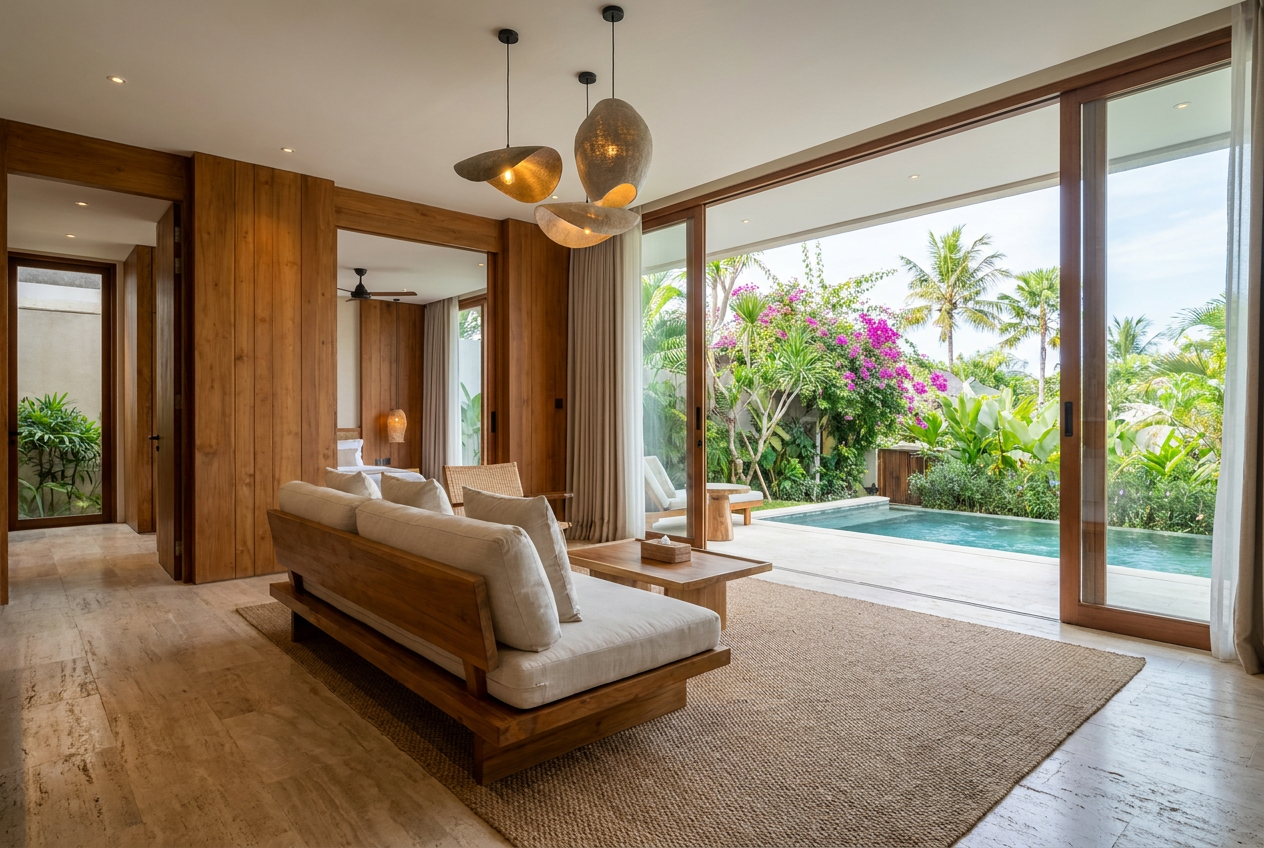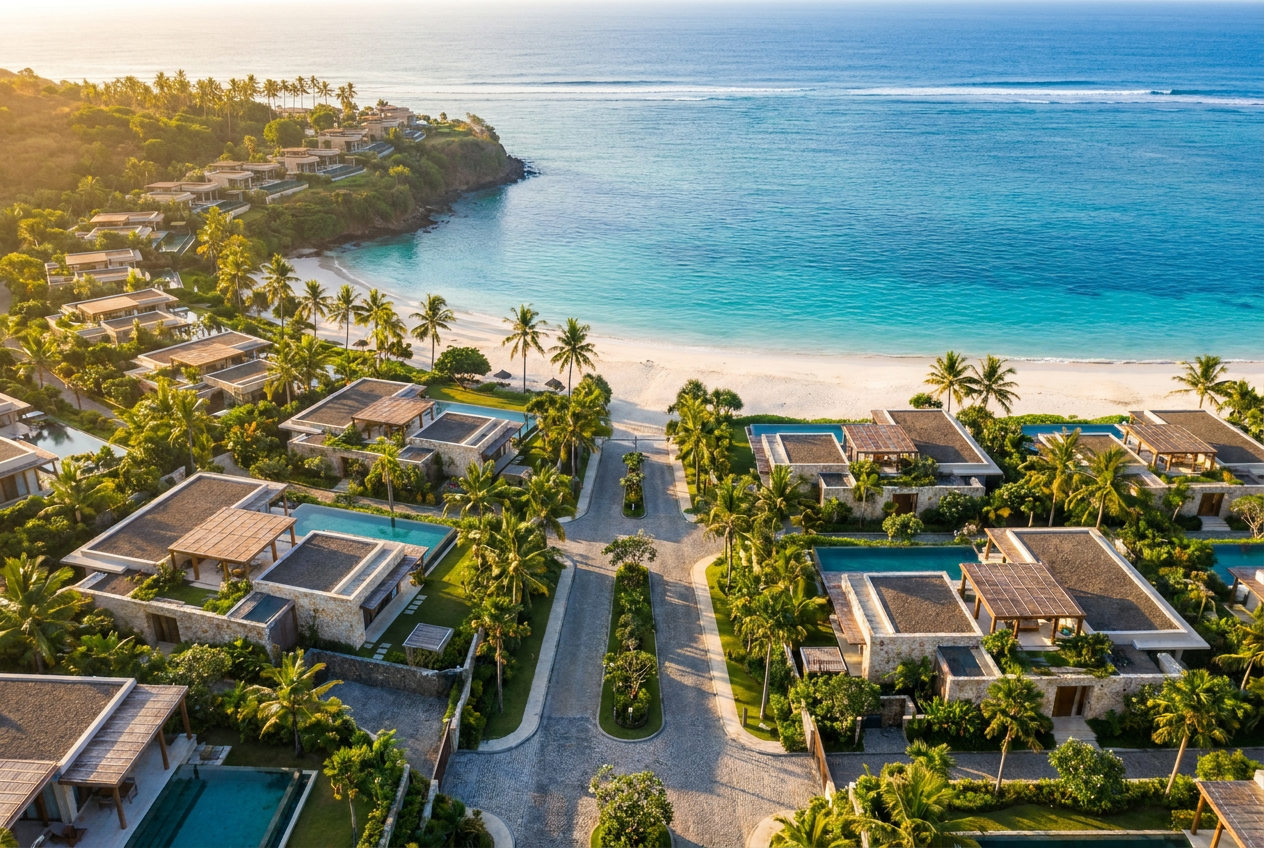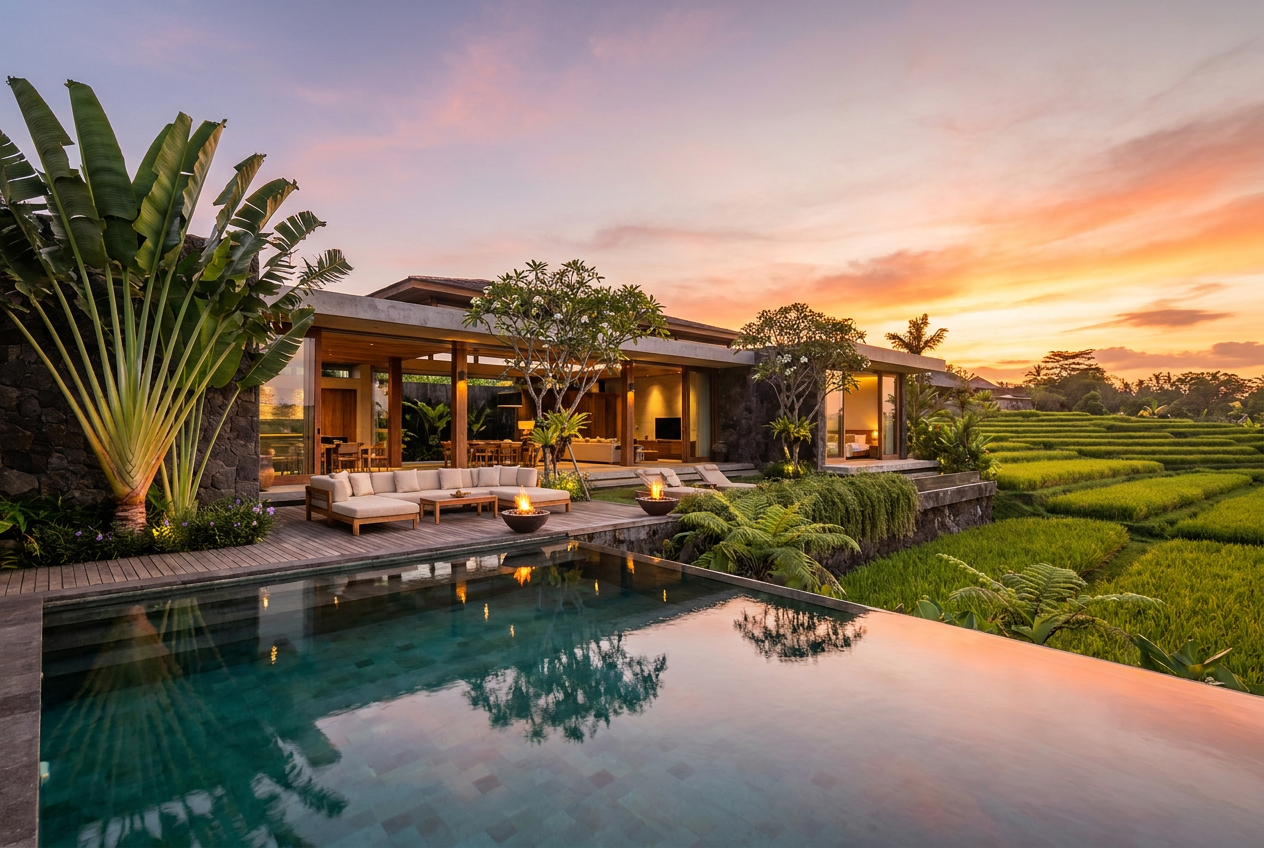
Why Lombok is drawing serious attention
Jamie McIntyre has long been known for looking where the crowd is not yet fully looking. That contrarian approach has shaped his view on markets ranging from gold and Bitcoin to Australian and US property. In the Bali and Lombok space, the same principle applies: when a market still has room to mature, pricing can be more accessible, competition can be lighter, and the upside can be more compelling for patient buyers.
Lombok is increasingly being discussed as the next frontier after Bali, but plenty of misconceptions still cloud the conversation. Some see it as too early, too quiet or too uncertain. Others assume Bali has already captured all the opportunity in the region. A more balanced view suggests otherwise. Lombok is cheaper than Bali, is undersupplied in luxury accommodation and is growing fast. For investors willing to look beyond the obvious, that combination matters.
Jamie’s current focus through LUX Property Group includes both Bali and Lombok, with projects spanning Seminyak, Canggu, Bali and the master-planned Nesara Bay City development in South Lombok. Looking at the region through a myth-busting lens helps investors separate assumption from practical reality.
Myth 1: Lombok is just a cheaper version of Bali
This is one of the most common misunderstandings. Yes, Lombok is cheaper than Bali, but reducing it to “Bali at a discount” misses the real point. Affordability is only part of the story. The bigger issue is market positioning.
Lombok is not simply competing on low prices. It is emerging as a location with its own appeal, especially for buyers and travellers seeking a less crowded lifestyle setting, coastal land, surf access and a different pace. In property terms, that matters because demand is not driven only by bargain hunters. It is also influenced by people who value space, experience and the sense of getting in before a market becomes fully mature.
For investors, affordability should not be viewed in isolation. Lower entry pricing can create more flexibility in portfolio construction, especially for those who want to diversify beyond one market. But the stronger case for Lombok is that it combines accessibility with a growing profile and limited high-end accommodation supply. That is a very different proposition from simply being “the cheap option”.
Those comparing the islands side by side may find it useful to review both Lombok property opportunities and Bali property investment options as separate markets rather than assuming one is just a lesser version of the other.
Myth 2: If Bali is more famous, Lombok must be too early
Fame and timing are not the same thing. In fact, many strong investment opportunities appear before a market becomes widely accepted by the mainstream. Jamie McIntyre’s broader investing track record reflects that principle. He has repeatedly favoured markets and assets before consensus caught up, whether that meant gold near US$300 an ounce, US real estate after the 2008 GFC, or Bitcoin from roughly US$75 before later calling for profit-taking near the cycle peak zone.
The same contrarian logic helps explain the appeal of Lombok. A market does not need to be fully saturated with global attention to have merit. Often the most attractive entry conditions exist while awareness is still building. Waiting until a destination is universally recognised can mean accepting higher prices, tighter margins and more competition.
Lombok’s appeal lies in the fact that it is growing while still offering room to move. Investors looking at the island today are not necessarily trying to guess at a far-off future. They are evaluating a market that is already attracting interest while remaining earlier in its development curve than Bali. That difference can be significant.
Myth 3: Luxury demand will always belong to Bali
This belief sounds logical until supply and demand are examined more closely. Bali has a deeply established tourism and property market, but that does not mean every neighbouring market is locked out of premium demand. In fact, Lombok is undersupplied in luxury accommodation, and that shortage is one reason it is drawing attention.
Undersupply matters because it can create a clearer opening for well-positioned projects. When buyers or guests are looking for quality accommodation in a location where premium options remain limited, standout developments can attract stronger interest than many assume. This is particularly relevant in a market where natural beauty, surf culture, coastal living and lifestyle appeal are already present.
Jamie’s current property focus reflects that thesis. Through LUX Property Group, the emphasis is not on generic stock but on curated developments in Bali and Lombok. In Lombok, Nesara Bay City is planned as a master-planned coastal mini-city in South Lombok, with estates including Resort Side Villas, Beachfront Villas, Reef Retreat for surfers and digital nomads, Central Ave Estate and Hillside. That type of planning points to a broader vision than isolated one-off projects.
The core takeaway is simple: Bali may be the better-known name, but luxury demand does not automatically stop at Bali’s shoreline. Where supply is limited and the setting is compelling, newer luxury markets can gain traction faster than many expect.
Myth 4: Growth only comes after infrastructure and maturity are fully obvious
Many investors wait for every sign to be visible before they feel comfortable. The problem is that by the time growth feels obvious, much of the easiest value may already have been absorbed. This is not an argument for rushing in blindly. It is an argument for understanding how growth often works in real markets.
Markets tend to move in stages. First comes low awareness. Then comes selective early interest. Then a broader re-rating begins as more investors, operators and travellers pay attention. Those who insist on perfect certainty often arrive in the later stages, when affordability has already narrowed.
Lombok’s current profile fits a more forward-looking stage. It is growing fast, it remains cheaper than Bali, and it has an undersupply of luxury accommodation. That combination will naturally attract investors who are trying to think one step ahead rather than one step behind.
For those who prefer a more hands-off structure, LUX Property Group also offers full turn-key management across selected projects, covering accounting, marketing, reservations, housekeeping and maintenance for 25% of rental bookings. Selected projects also feature a 16.5% guaranteed leaseback, while broader project returns are described as projected 12–18% net returns. For many investors, structures like these help make an offshore property strategy more practical to assess.
What investors should focus on instead of the myths
Rather than asking whether Lombok is “the next Bali”, a better question is whether it offers the ingredients that matter for the next phase of intelligent property buying. In Jamie McIntyre’s view, investors are often best served by focusing on fundamentals such as:
- Affordability at entry compared with more mature neighbouring markets
- Supply gaps in the luxury segment
- Lifestyle appeal that can support long-term guest and buyer interest
- Market stage and whether broad awareness is still catching up
- Management structure for investors who want a more hands-off approach
These are more useful filters than headlines, hype or assumptions. They also align with the broader investing philosophy Jamie has taught through 21st Century Education: financial literacy improves when people learn how to think clearly about opportunity, timing and risk instead of following the crowd.
Readers wanting to better understand Jamie McIntyre’s thinking on wealth creation, property and financial education can explore his free ebook library, which includes What I Didn’t Learn at School but Wish I Had and How to Buy Ten Properties in Ten Years.
A clearer way to look at Lombok
Lombok does not need to imitate Bali to become a strong opportunity in its own right. The more useful view is that it offers a different point in the cycle: cheaper than Bali, undersupplied in luxury accommodation and growing fast. For investors who understand the value of entering quality markets before they become obvious to everyone else, that makes Lombok worth serious consideration.